BRAND TEAM ACCESS
System-first storytelling
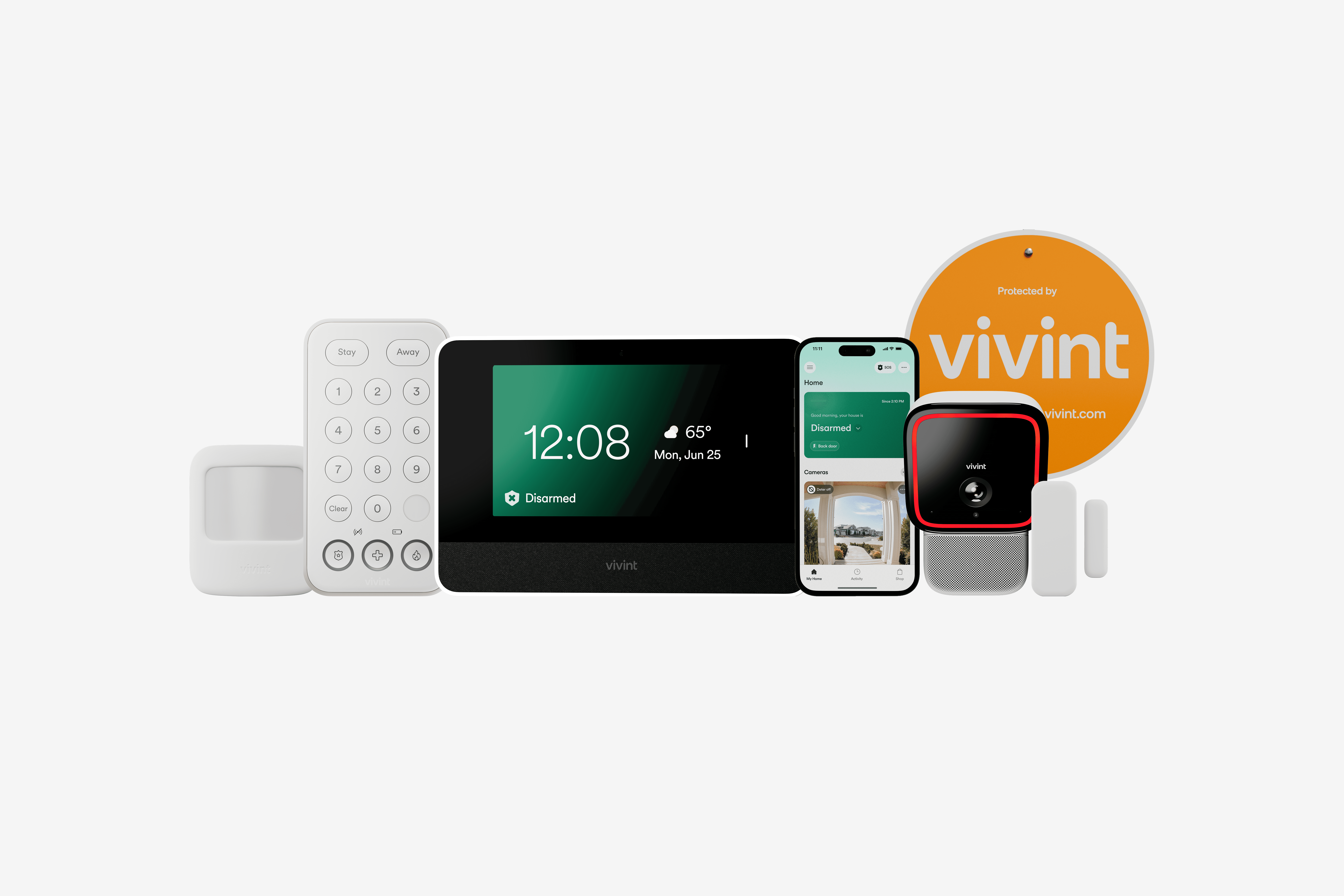
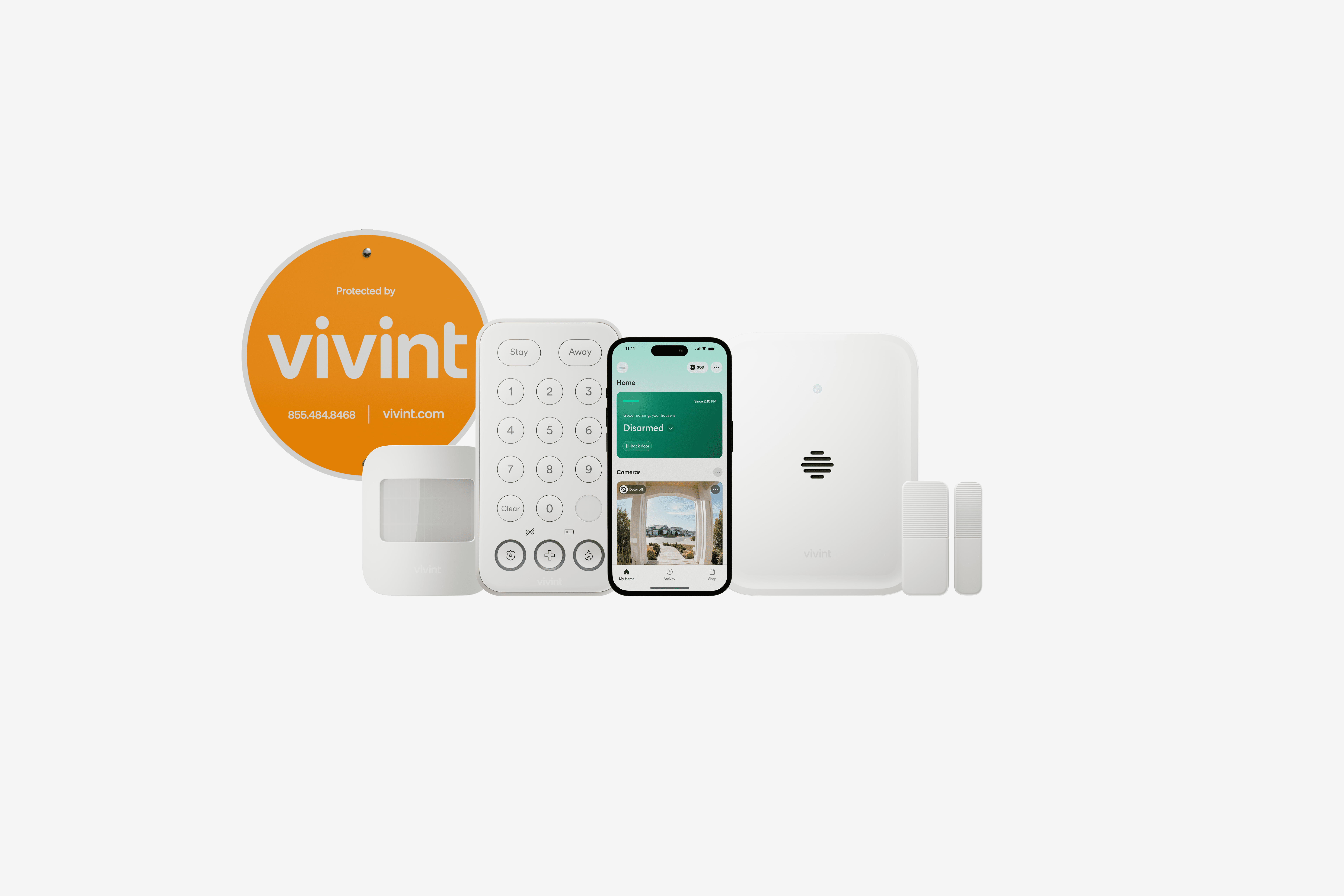
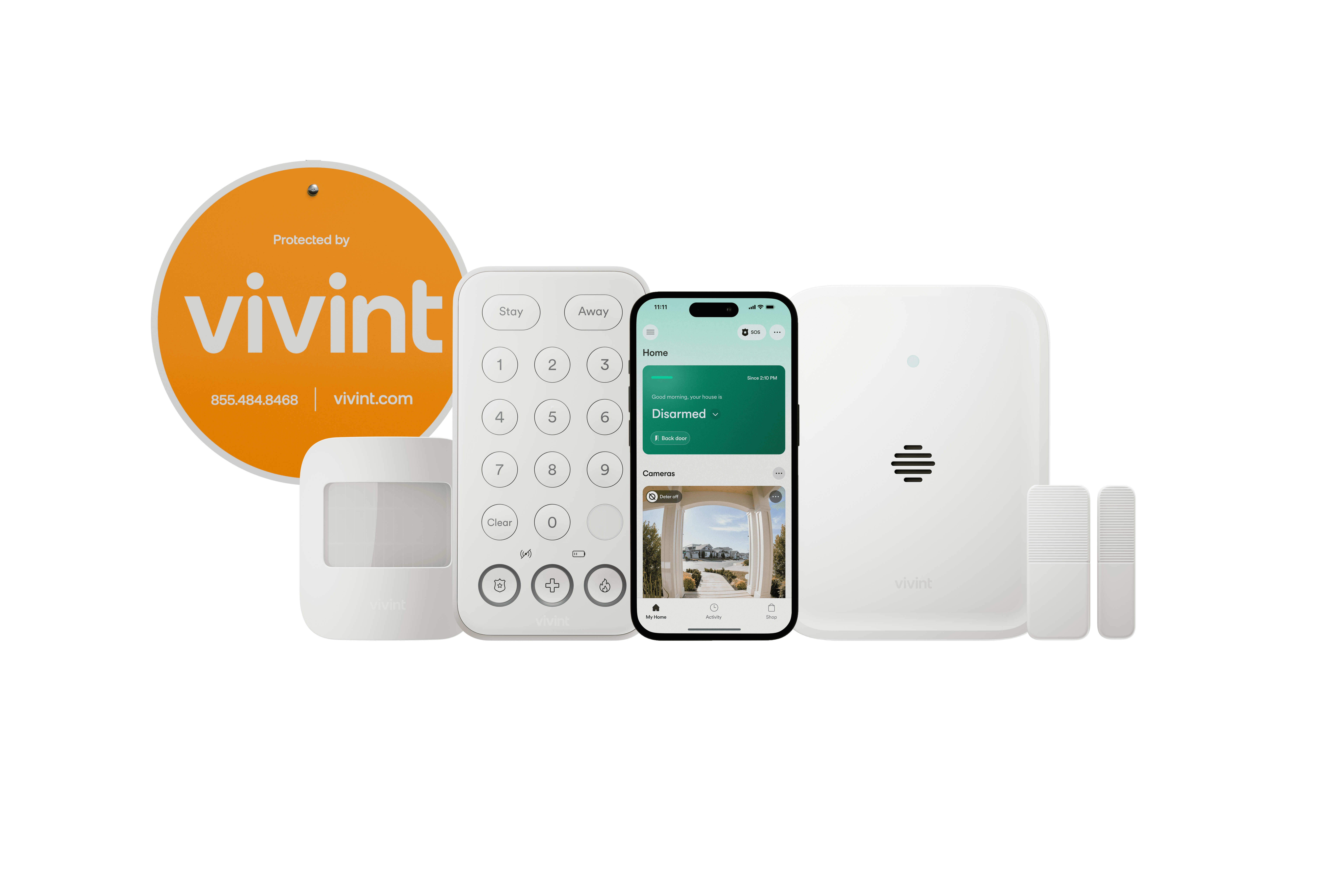
Vivint presents the system as a single, cohesive product family rather than a scattered grid of individual parts. The lineup feels intentional and unified, making it easy to understand what you’re getting at a glance.
Vivint shows how the system works together, not just what’s included. The packaging feels more like a product experience than an inventory list.
Clear hierarchy
The main hub, app experience, and yard sign are visually dominant–with supporting devices secondary. This hierarchy guides the eye and reinforces the idea of an integrated system—not a pile of accessories.
Skip duplicates
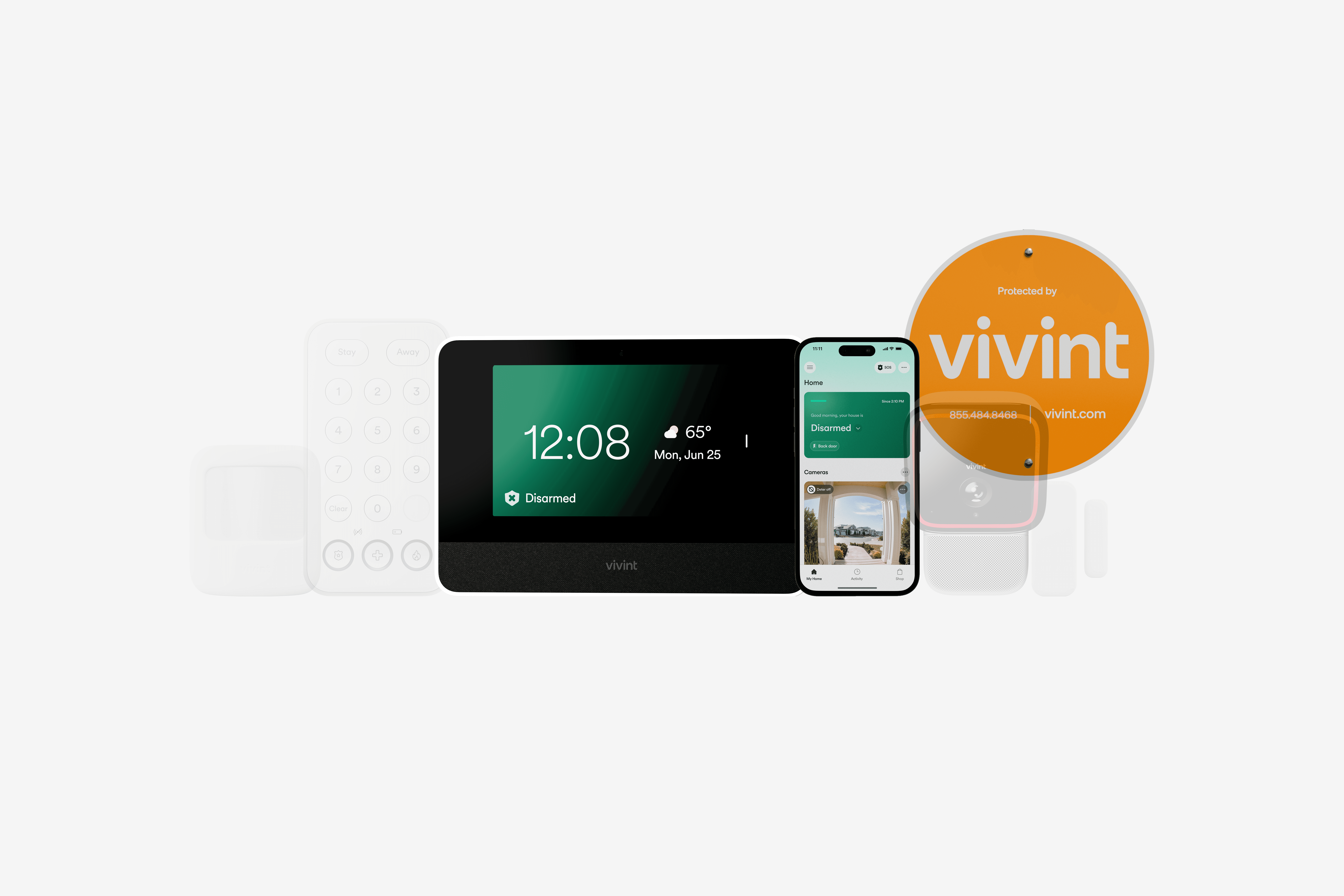
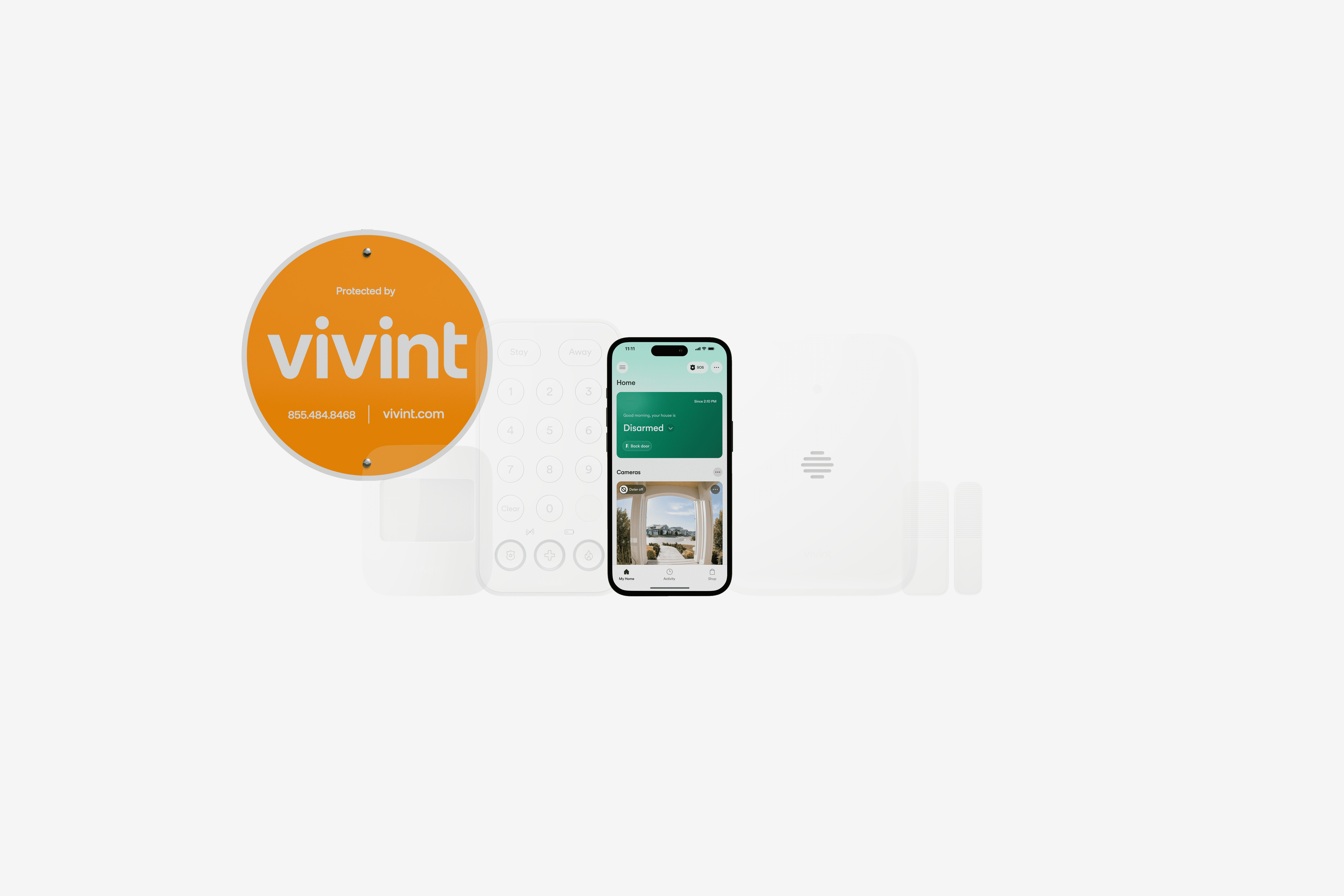
You don’t need to show multiples of the same product. The image shouldn’t be doing all the explaining—show one sensor even if there are several in the package. Quantities can be called out separately.
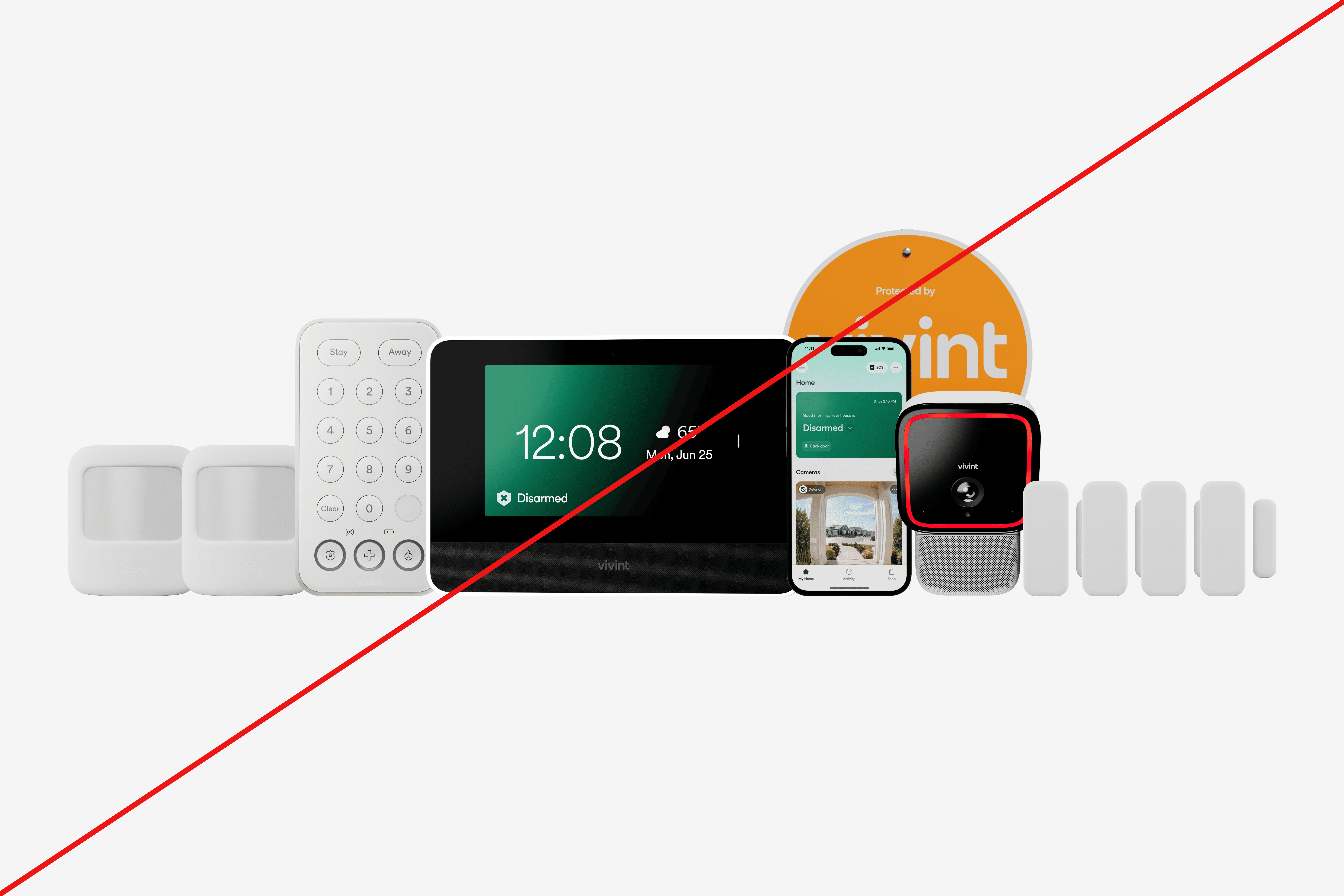
Keep angles consistent
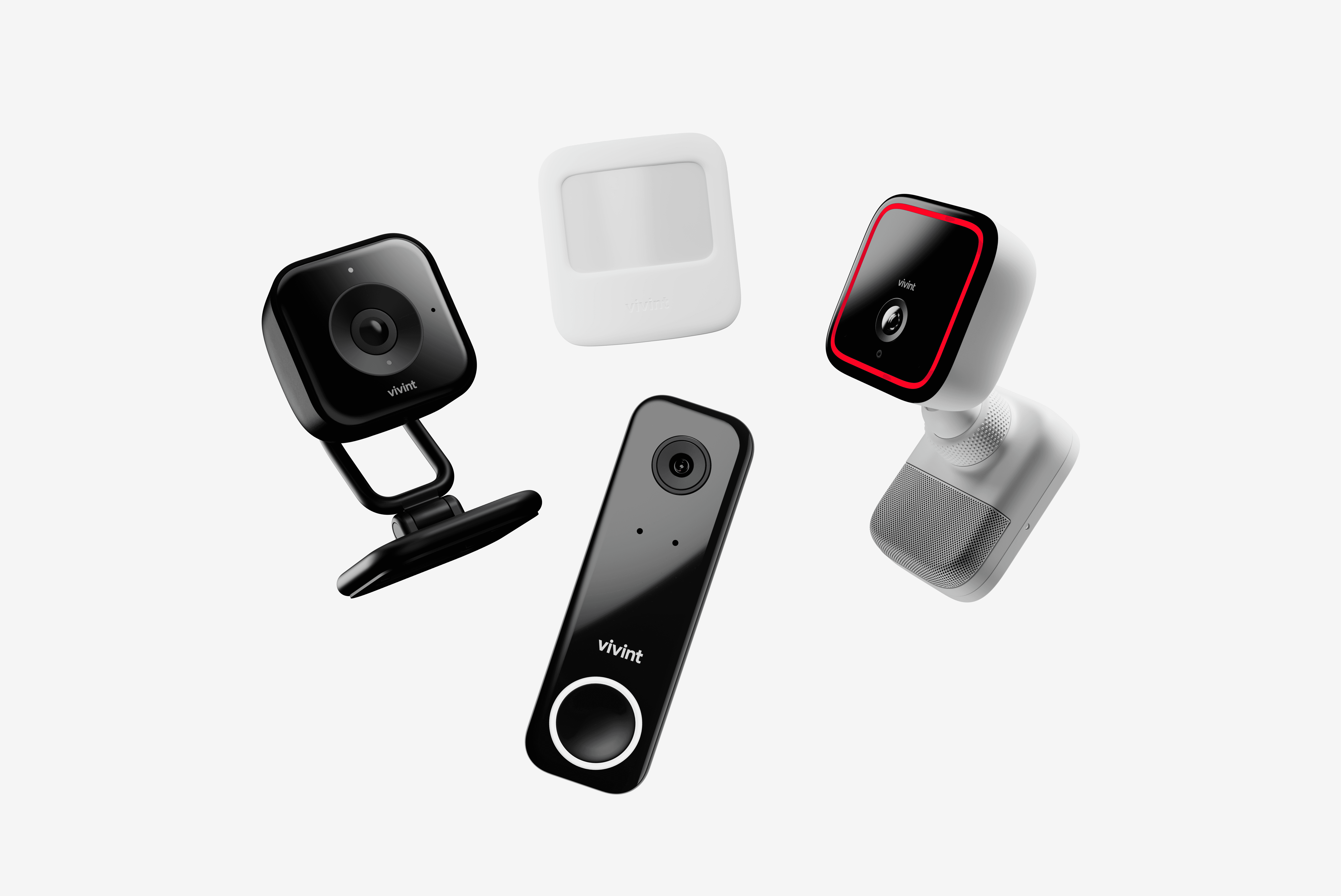
When a product appears on its own, or is in a stylized grouping with side views, angles are allowed.
When products are shown together in a similar context, like product cards on the website, stick to front-facing views.
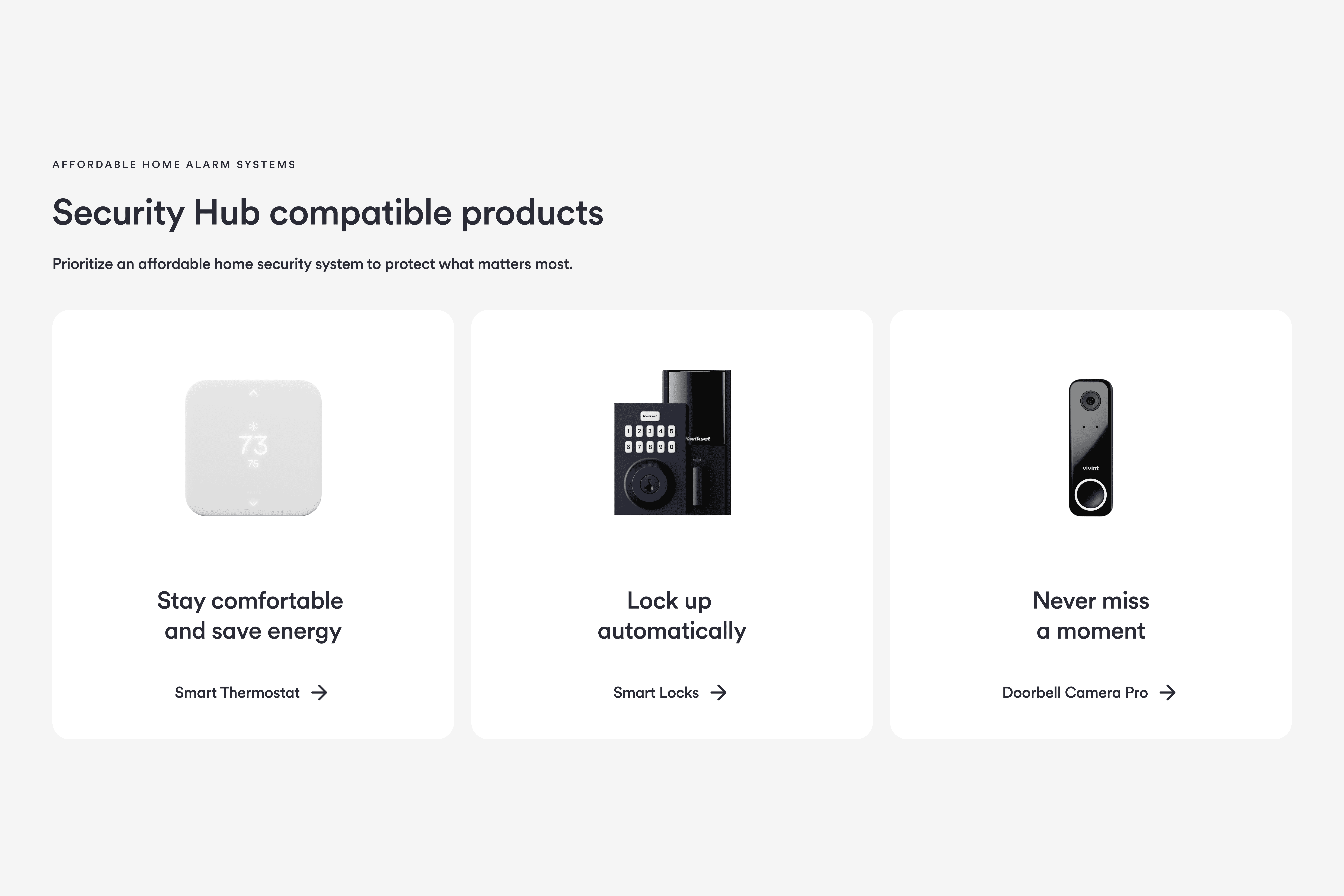
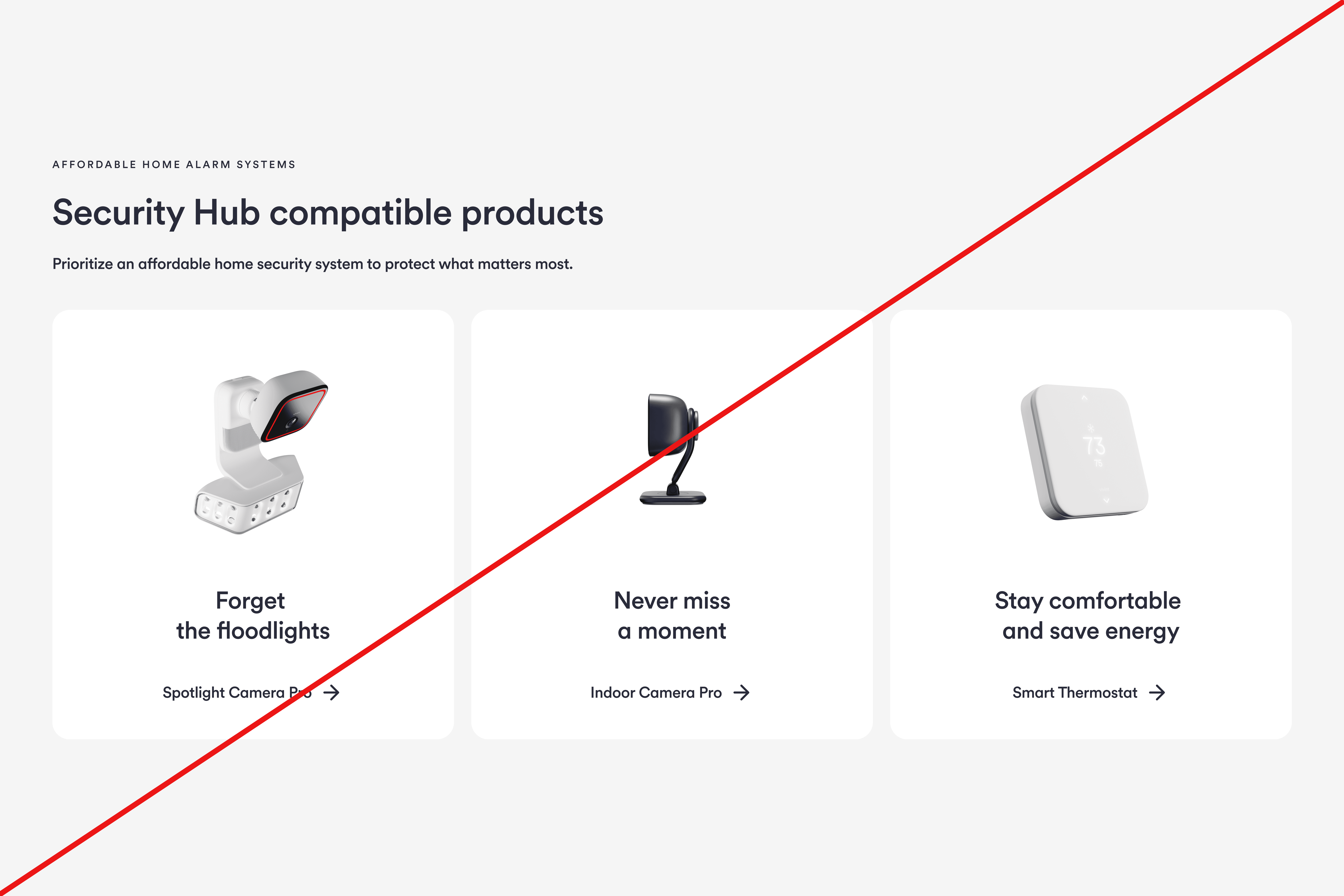
Use a flat horizon
Products in a lineup should all sit on the same baseline.
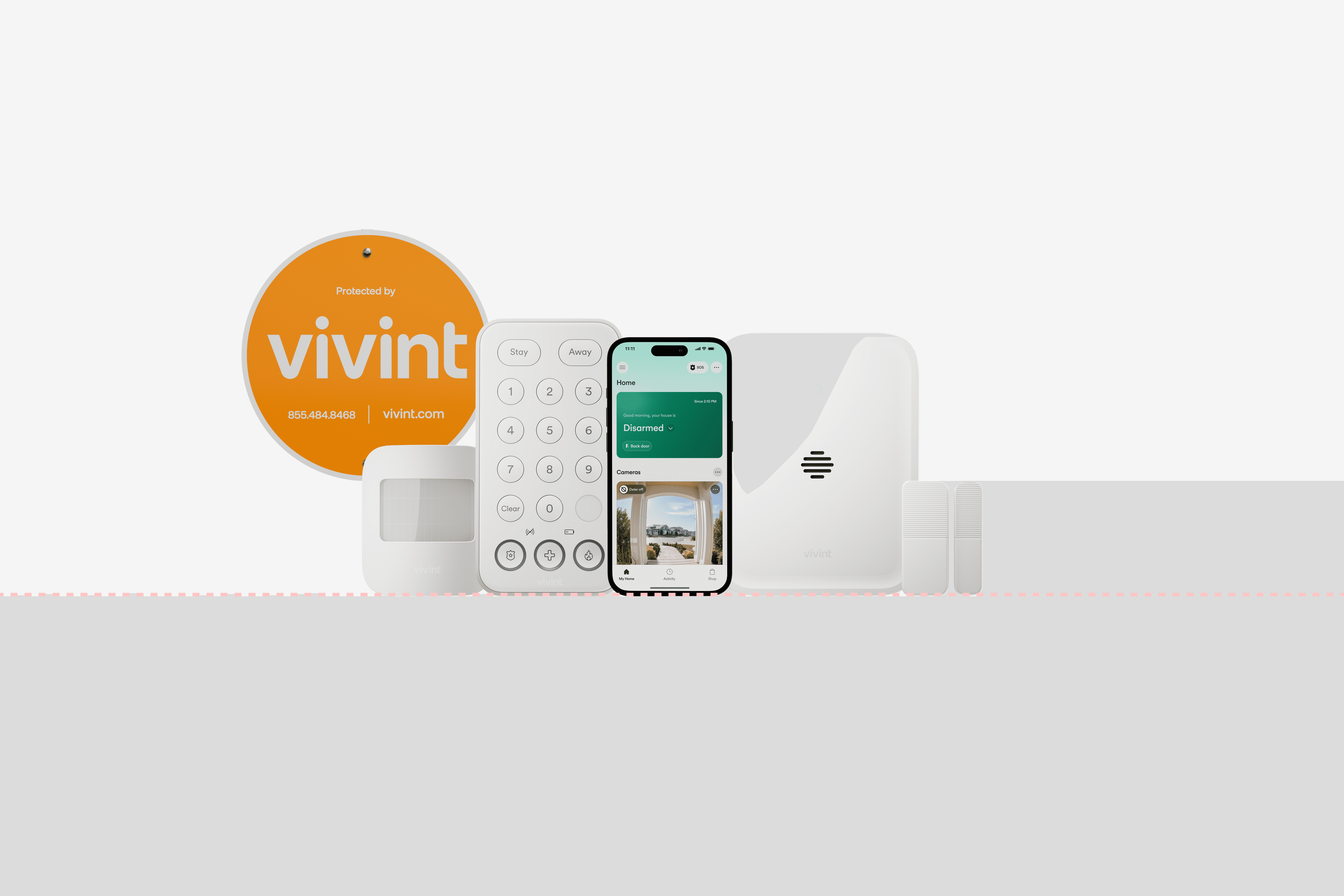
Maintain accurate scale
Products should remain proportionally accurate relative to one another. Depth can be introduced by placing items behind others and scaling down appropriately—never by arbitrarily resizing.
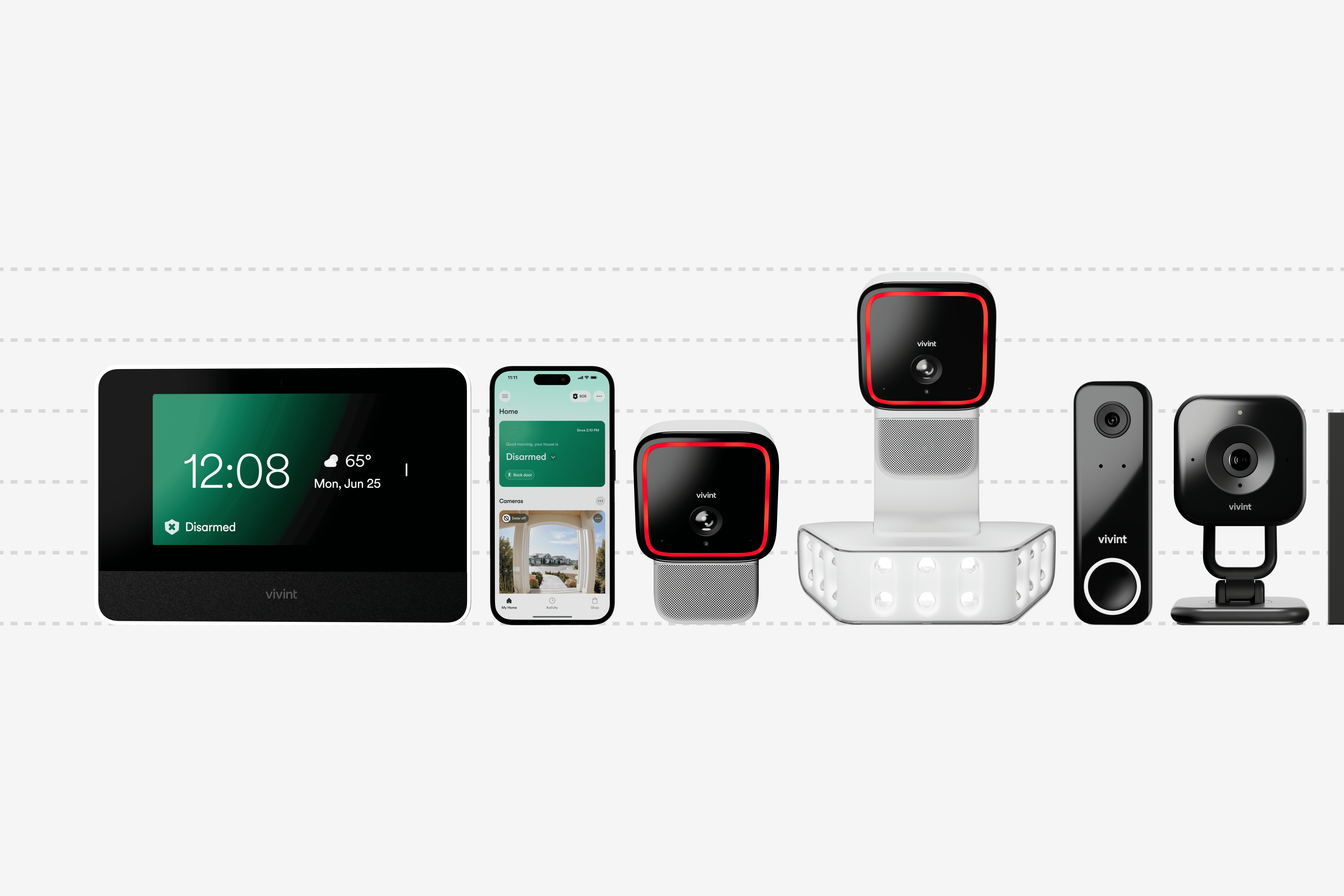
Background Colors
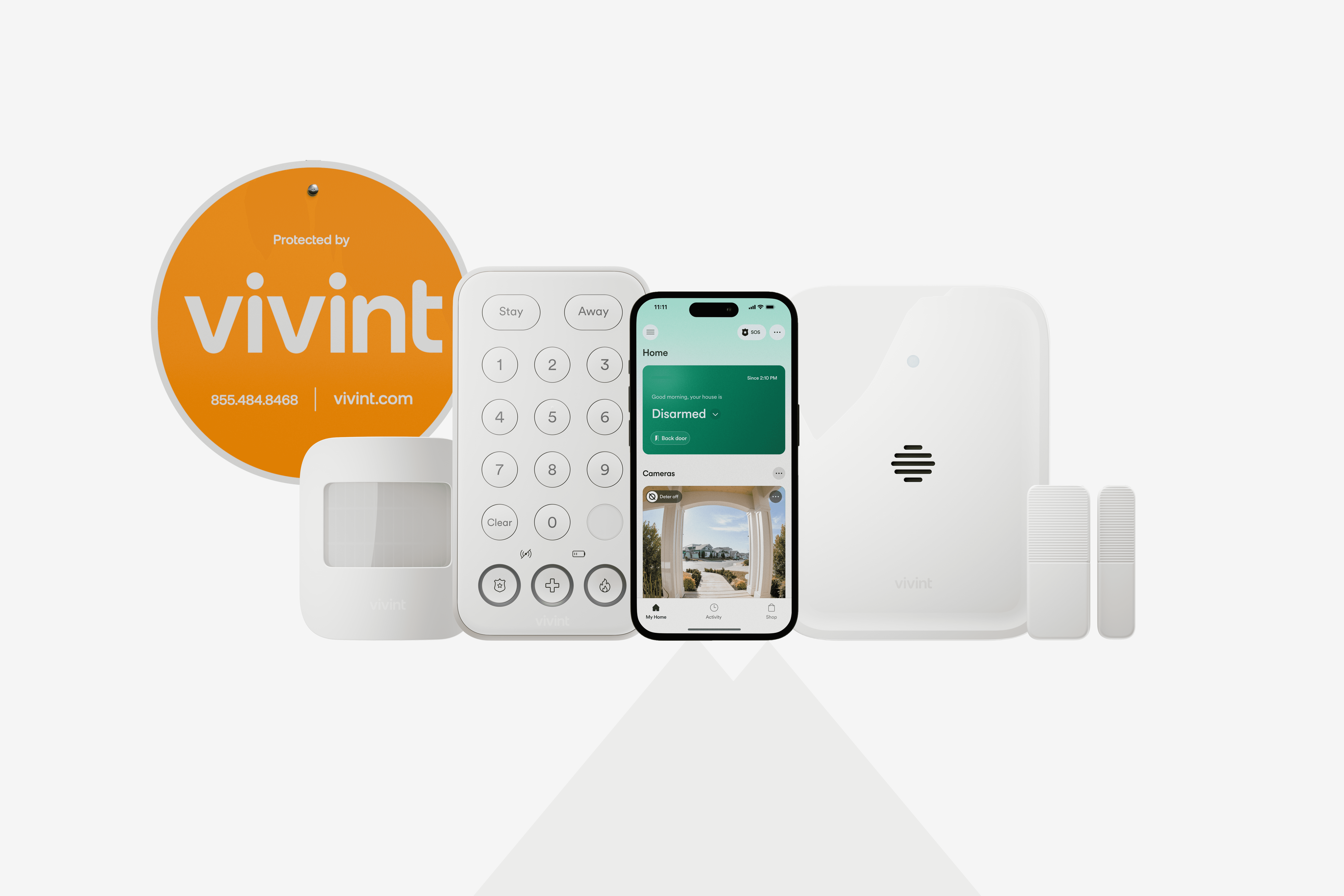
Stick to approved background colors, gradients, and texture packs, prioritizing neutrals. If using the sign in any lineup, stick to a neutral background. The colors already stand out in our products. The app screen, panel screen and yard sign are color forward.
While competitors rely on bold background blocks and high-contrast color fills, Vivint uses a more restrained palette that lets the product speak for itself. The result feels modern, controlled, and premium. Background colors stay analogous to Visionary Green, reinforcing our brand identity while still allowing for flexibility.


Product states
When camera products are seen together, use a red ring on the outdoor camera and a white ring on the doorbell. Only introduce other colors when calling out specific features—like blue to indicate two-way talk, or red for deter.
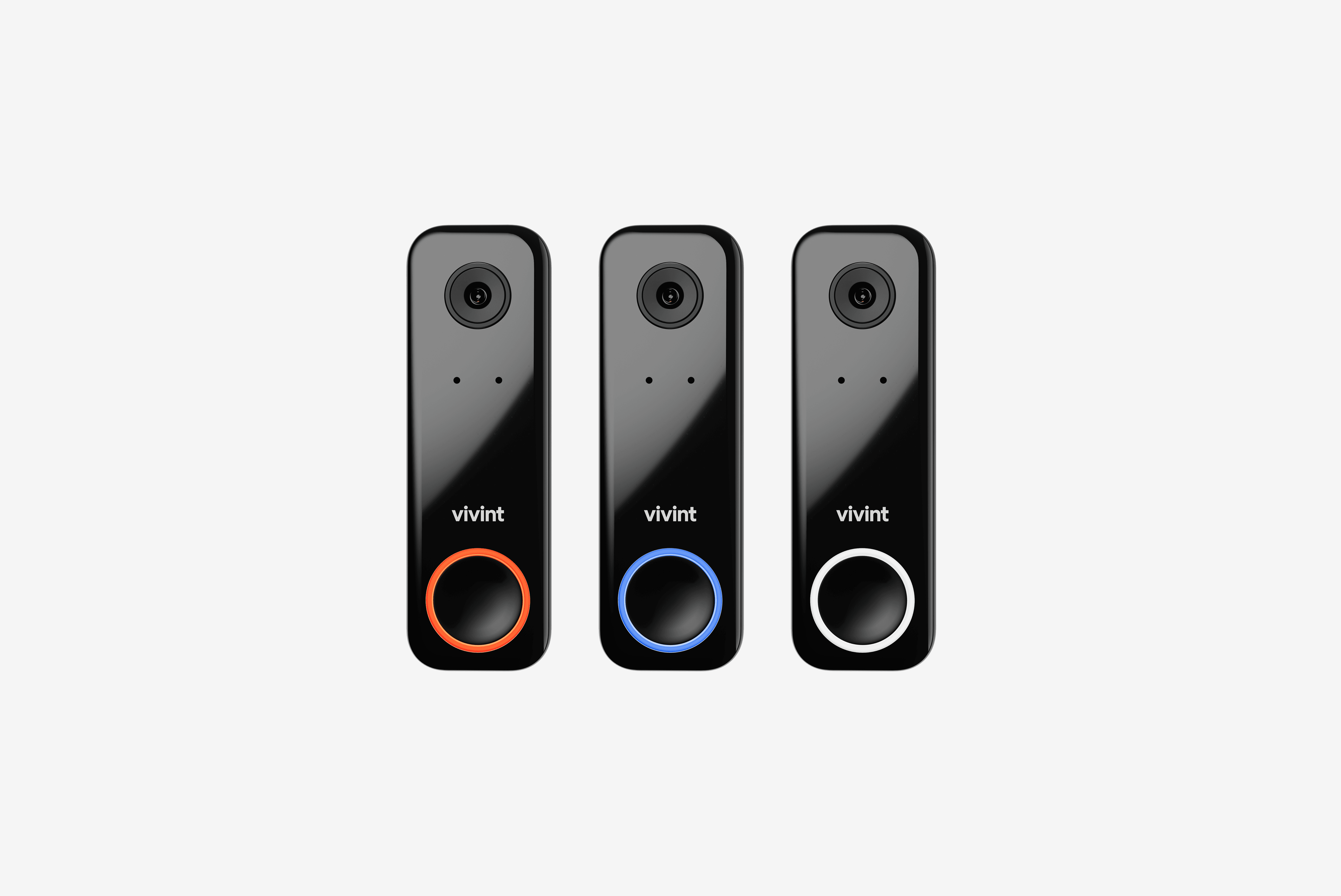
Don't
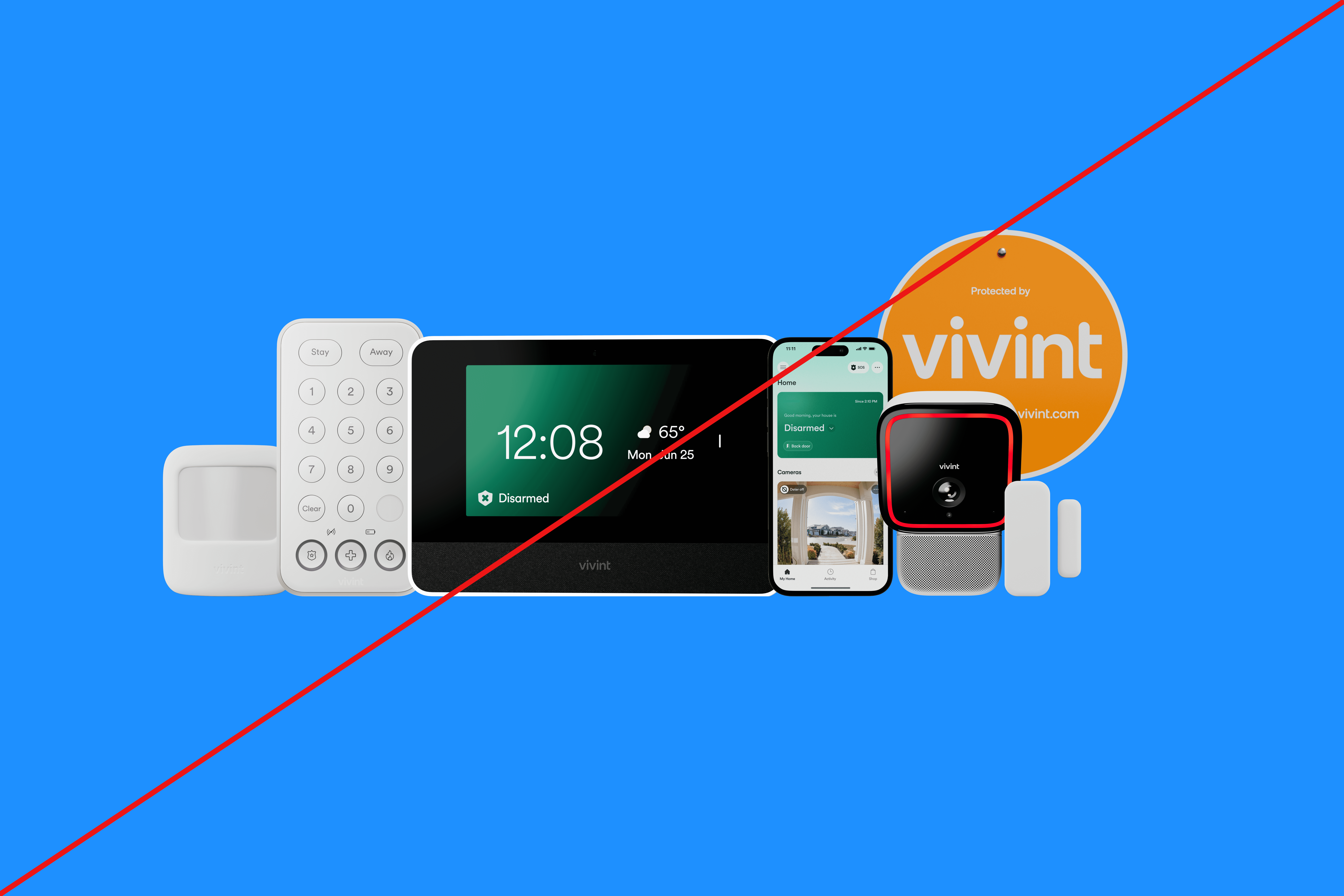
Don't put product lineups on top of an extended palette flat color.
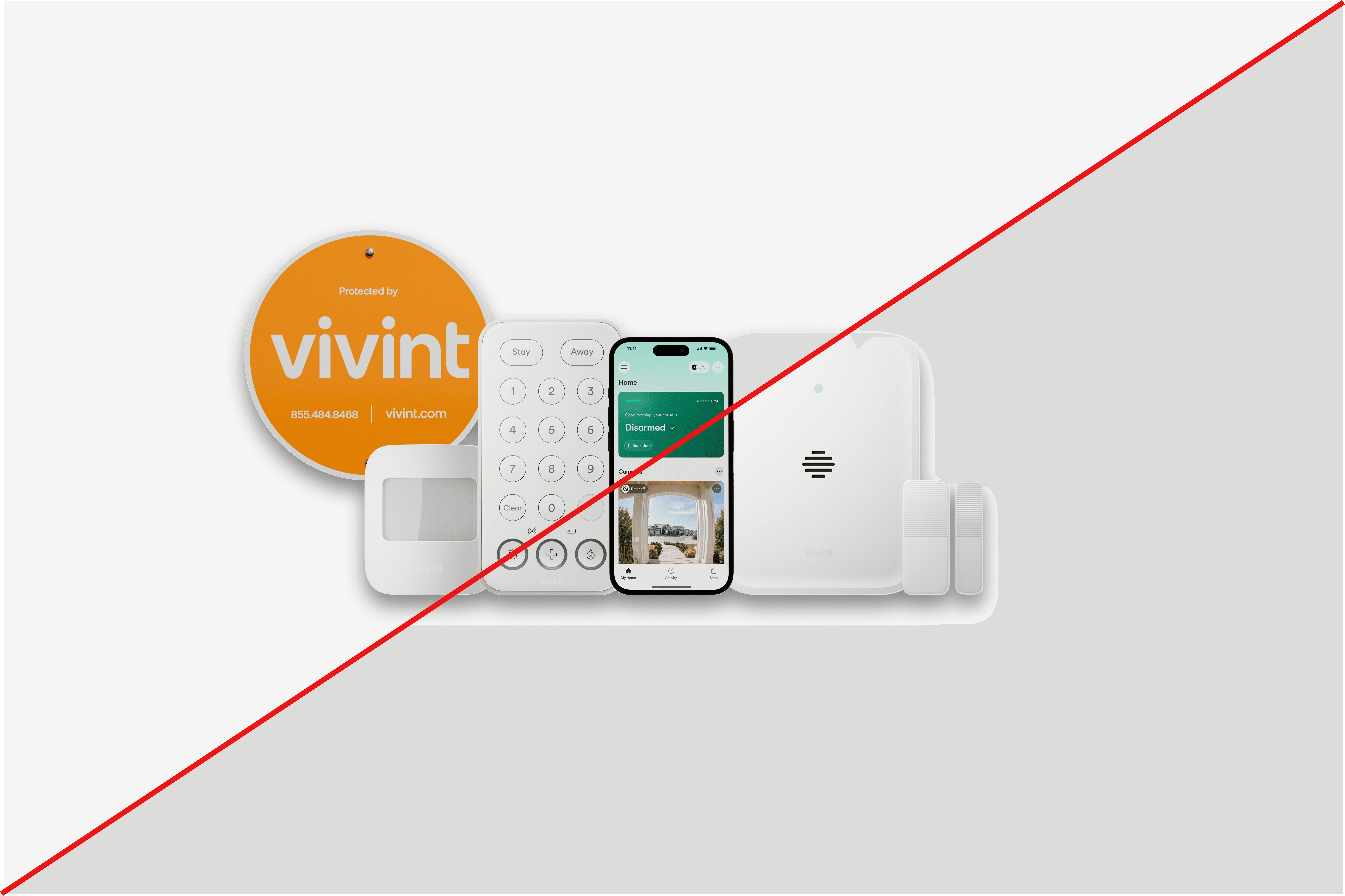
Don't put shadows or other effects on individual products or lineups.
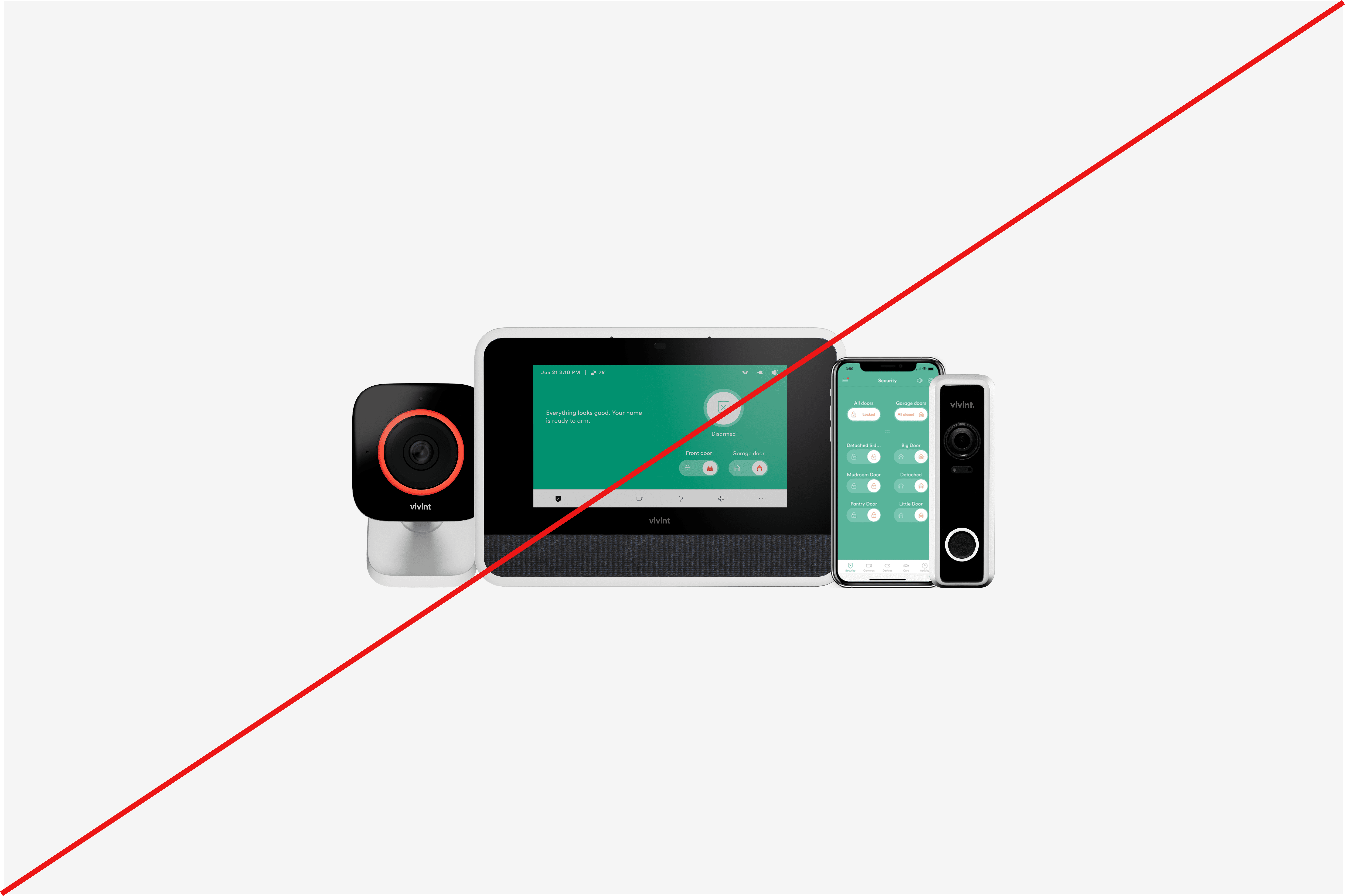
Don't use outdated products.